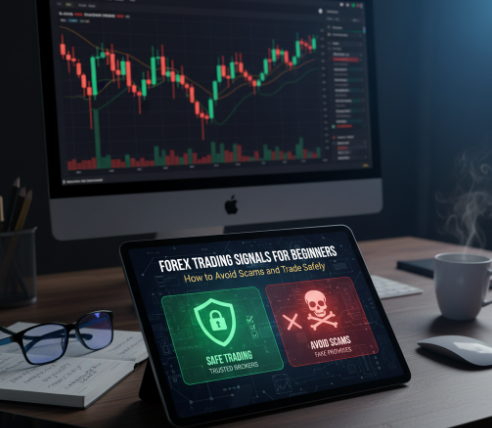
Forex Trading Signals for Beginners: How to Avoid Scams and Trade Safely
Trading signals in the forex and CFD markets are comparable to a GPS unit in your car. They tell you when you might consider a buy or sell in a currency pair, but you might run into unexpected traffic along the way, and therefore, not reach your destination.
At cool, trading signals can be defined as alerts or recommendations that indicate a possible trading opportunity based on some form of market analysis. They have been used in financial markets since the dawn of the trading era. What has changed over the years is the complexity of trading signals. They have evolved from very basic arrow pointing signals found on line charts to extremely sophisticated algorithmic signals that alert you via your phone, within seconds and in real-time.
hree Types of Trading Signals - Manual, Automated, Social
Manual signals are signals generated by human analysts or experienced traders who analyze charts, check news/market conditions, and, when comfortable, provide a recommendation. Manual signals might be considered like your experienced teacher providing individual advice.
They are great to read into, as they typically have paragraph-long explanation of the recommended trade, meaning the novice traders gain something educational too. The downside to manual signals is limited human availability, and the possible delay during fast price action.
How Signals are generated (Technical signal/ Market sentiment)
A technical analysis signal is math representation, as it applies to a forex market, to evaluation. Technical signals are based on price charts and potential price patterns associated with the bounce using mathematical indicators. Example price crossing above the EUR/USD 50-day moving average may dictate a bullish signal.
However, other popular Technical triggers may include the RSI has crossed above 70 (potentially overbought) or below 30 (potentially oversold), the MACD line has crossed above its signal line, or the price has bounced off the lower Bollinger band to the upside.
How to Read and Interpret Trading Signals: A Beginner's Guide
Entry Price: This tells you exactly where to enter the trade. For example, if the signal reads “Buy EUR/USD at 1.0850,” this means to place your buy order when the price hits 1.0850. Occasionally signals presents a price range: “Buy between 1.0845-1.0855,”, which accounts for normal market fluctuations.
Stop Loss (SL): This acts as your safety net - it indicates the price level at which you will exit a trade in case the price moves against you. For instance, in our example "SL: 1.0800", if the EUR/USD goes to 1.0800, you will close the position, and accept a small loss. We can think of this as your trading insurance policy.
Benefits and Risks of Trading Signals
Trading signals save you a lot of time. Instead of chart staring for hours, you will get trade ideas from analysts that have experience, or algorithms that have time put into them. This becomes even more valuable to professionals who can't be in front of the market all day.
They are effective methods of learning as well. Good quality signals often accompany a description of the setup in the market so that newer traders can learn why certain trades make sense. It's quite similar to having a coaching and having someone show you the steps and not pay to get into expensive one-on-one coaching.
Are Forex Trading Signals Worth It? The Final Answer
The biggest benefit of signals is the ability to access diverse signals. Multiple signals provide the trader a more complete picture of the market's conditioned. Just as doctors seek second (and third) opinions for serious diagnostic purposes, savvy traders seek out multiple opinions before they make any significant trading decision.
At the same time, you must remember the rule of rules; signals guide, but discipline is what enables success. You cannot rely on good signals, if you are terrible on risk management, emotional, or have unrealistic expectations.
For more info:-


Comments
Post a Comment